How to Protect Your Guitar in Hot Weather: Simple Tips for Beginners
Mark Mannering Barton - Pick to Play Guitar
Warm weather can be great for barbecues, holidays and sitting outside with a guitar.
But guitars do not always love heat.
Whether you play acoustic or electric guitar, high temperatures and sudden changes in temperature can affect tuning, wood, glue, strings and even the finish of your instrument.
The good news is that you do not need to panic. A few simple habits can help keep your guitar safe through the warmer months.
Why hot weather can affect your guitar
Guitars are made from materials that react to their environment.
Wood expands and contracts. Metal strings respond to temperature changes. Glue joints can be affected by extreme heat. Finishes can become more vulnerable if a guitar is left somewhere too hot for too long.
This is especially important for acoustic guitars, because the body is made from thin pieces of wood that are designed to vibrate. That is what gives the guitar its sound, but it also means the instrument can be sensitive to heat and humidity.
Electric guitars are usually a little more robust, but they can still be affected by temperature changes, tuning instability and damage to the finish.
Do not leave your guitar in a hot car
This is one of the most important rules.
A car can become extremely hot very quickly, even if the outside temperature does not feel unbearable.
Leaving a guitar in a hot car can cause serious problems, especially if it is left in direct sunlight or in the boot for a long period.
Possible issues include:
Softened glue
Warped wood
Finish damage
Loose braces inside an acoustic guitar
Neck movement
Tuning instability
If you would not leave a dog, phone, laptop or chocolate in the car, it is probably not a good place for your guitar either.
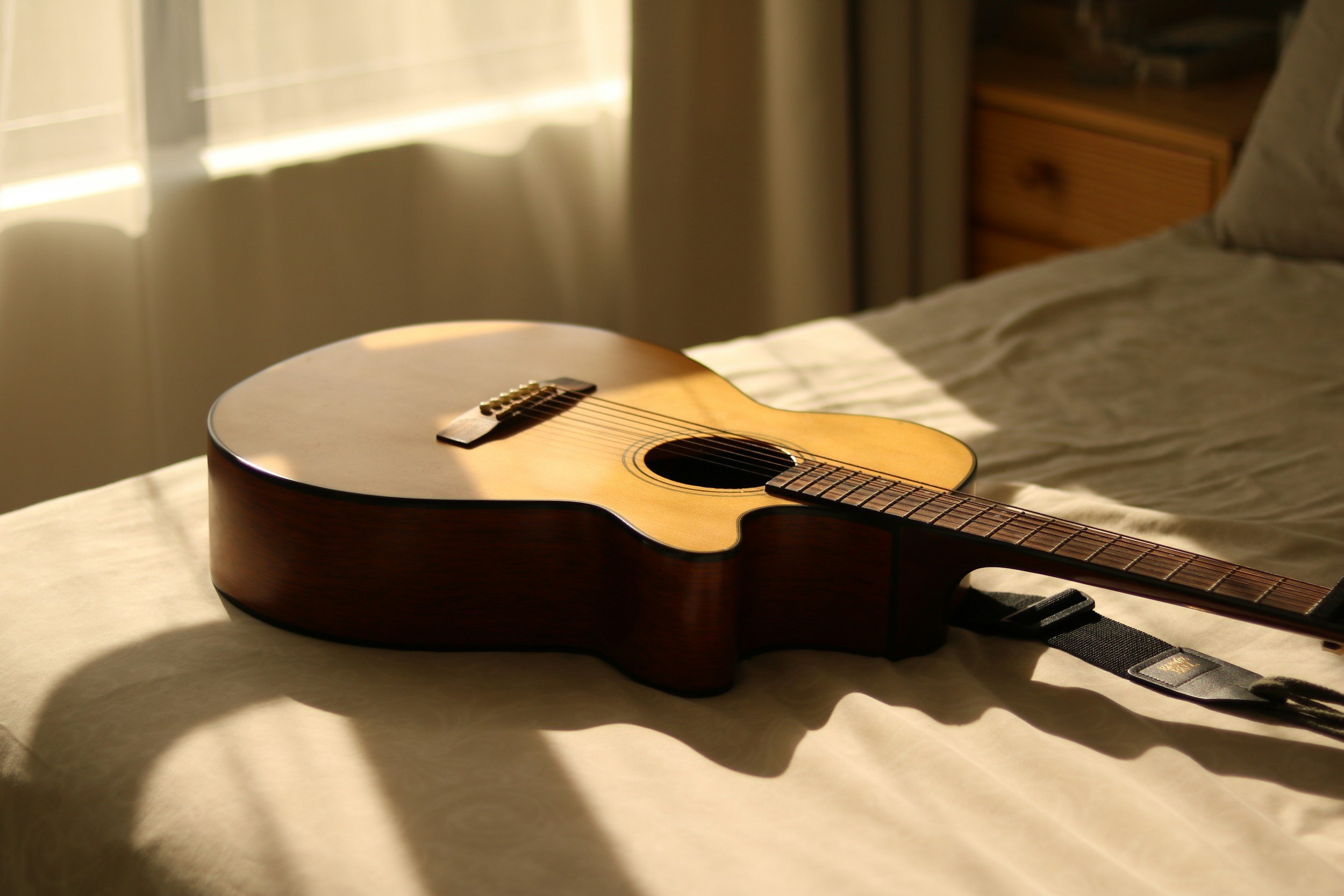
Keep it out of direct sunlight
It can be tempting to leave your guitar on a stand near a window so it is easy to pick up and play.
But direct sunlight can heat the guitar unevenly.
One part of the instrument may become much warmer than another, which can put stress on the wood and finish. Over time, sunlight can also fade or discolour some finishes.
A guitar stand is fine, but try to keep it away from windows, radiators, conservatories and sunny corners of the room.
Be careful with sudden temperature changes
Guitars usually cope better with gradual changes than sudden ones.
If your guitar has been in a warm car, hot room or direct sun, do not immediately open the case and start playing in a much cooler environment.
Let it adjust slowly.
A good habit is to leave the guitar in its case for a little while when moving between very different temperatures. The case acts like a buffer and helps the guitar adjust more gradually.
Watch the humidity as well as the heat
Hot weather is not just about temperature.
Humidity matters too.
Too dry, and the wood can shrink. Too damp, and the guitar can swell. Both can affect the way the guitar feels and sounds.
For acoustic guitars in particular, humidity is worth keeping an eye on. If you own a solid wood acoustic guitar, it is a good idea to use a small guitar hygrometer so you can check the humidity in the room or case.
As a general guide, many guitars are happiest around the middle range of household humidity rather than very dry or very damp conditions.
Keep your guitar in its case when needed
If your home gets very hot during the day, keeping your guitar in its case can offer some protection.
A hard case is usually better than a soft gig bag for temperature stability, but either is often better than leaving the guitar in direct sunlight or in a very hot room.
This does not mean your guitar has to live in its case all the time. If having it out makes you play more, that is a good thing.
Just be sensible during hot spells.
If the room gets very warm, move the guitar somewhere cooler and shaded.
Check your tuning before playing
Hot weather can make your guitar drift out of tune more easily.
Strings expand and contract with temperature changes, so it is normal for the guitar to need tuning more often.
This is not usually a sign that anything is wrong.
Before practising, take a minute to tune up properly. It will make your playing sound better and help train your ear.
For beginners, using a clip-on tuner or phone tuner app is perfectly fine.
The biggest beginner mistake
The biggest mistake is pressing too hard.
With normal guitar playing, we are used to pushing the string down onto the fretboard. With slide guitar, you are not trying to do that.
The slide should rest on the string, not squash it.
Another common issue is unwanted noise. Because the slide touches the strings, other strings can ring out by accident. That is why muting becomes important.
Use your picking hand and spare fretting fingers to gently stop strings you are not playing.
This takes time, so do not worry if it sounds messy at first.
Wipe the strings after playing
In hot weather, hands can get sweatier.
Sweat and oils from your fingers can shorten the life of your strings and make them feel dull or sticky.
After playing, give the strings a quick wipe with a clean, dry cloth.
This simple habit can help your strings last longer and keep the guitar feeling nicer to play.
Be careful playing outside
Playing guitar outside can be lovely, especially in summer.
Just be careful where you put it down.
Avoid placing your guitar:
In direct sun
On hot paving
On damp grass
Near drinks
Somewhere it could be knocked over
Too close to sand, dust or water
If you are taking a guitar to the park, beach or garden, consider using a less expensive instrument rather than your main guitar.
Outdoor playing is great, but outdoor conditions are less predictable.
Acoustic guitars need a little extra care
Acoustic guitars are more sensitive to heat and humidity than most electric guitars.
The top, back and sides are made from thin wood, and the instrument relies on that wood vibrating freely.
Signs that an acoustic guitar may be struggling include:
The action suddenly feeling much higher or lower
Buzzing strings
Sharp fret ends
A change in tone
Cracks in the wood or finish
The bridge lifting
The top looking unusually sunken or swollen
If you notice anything like this, it is worth asking a guitar technician to take a look.
Electric guitars still need protection
Electric guitars are generally more solid, but heat can still cause issues.
Tuning can move. Necks can shift slightly. Finishes can react badly to heat. Electronics can also suffer if exposed to extreme temperatures or damp conditions.
So even though an electric guitar may feel tougher, it is still worth treating it with care.
A simple hot weather guitar checklist
Here is a quick checklist for beginners:
Do not leave your guitar in a hot car
Keep it out of direct sunlight
Avoid conservatories and very hot rooms
Let it adjust slowly after temperature changes
Tune before each practice session
Wipe the strings after playing
Store it in a case during very hot spells
Keep drinks, water and damp grass away from it
Check acoustic guitars for changes in action, buzzing or movement
Final thoughts
You do not need to be nervous about owning a guitar in hot weather.
You just need to be sensible.
Most guitars will be absolutely fine if they are kept out of extreme heat, away from direct sunlight and given a little care after playing.
The main thing is to remember that a guitar is not just an object. It is made from wood, metal, glue and finish, and all of those materials respond to the environment around them.
Look after it, and it will stay easier to tune, nicer to play and ready for your next practice session.
Relaxed Guitar Lessons in Richmond, Teddington and Online
Pick To Play Guitar offers friendly beginner guitar lessons focused on simple, practical steps that help you build confidence from the start.
Book your free intro call
(see link on the Header of the website or Contact Me Here
For recomended Gear
I’m always asked for gear advice so I’ve started putting a page together so do look Here