Why Your Chord Changes Feel Slow (And How to Fix It Without Practising More)
Mark Mannering Barton - Pick to Play Guitar
If you’ve recently started learning guitar, there’s a good chance this feels familiar:
You can play the chords individually…
But the moment you try to switch between them, everything falls apart.
It feels slow, clunky, and frustrating — especially when you’re trying to play along to a song.
This is one of the most common sticking points for beginners.
The good news is, it’s not about talent — and it’s not about needing to practise for hours.
Most people are practising the wrong thing
A lot of beginners try to improve chord changes by simply repeating them over and over again.
For example:
G → C → D → G, again and again.
While repetition does help, it’s often not the most effective way to improve.
Why?
Because the issue usually isn’t the number of reps.
It’s how your fingers are moving between chords.
It’s not speed — it’s movement
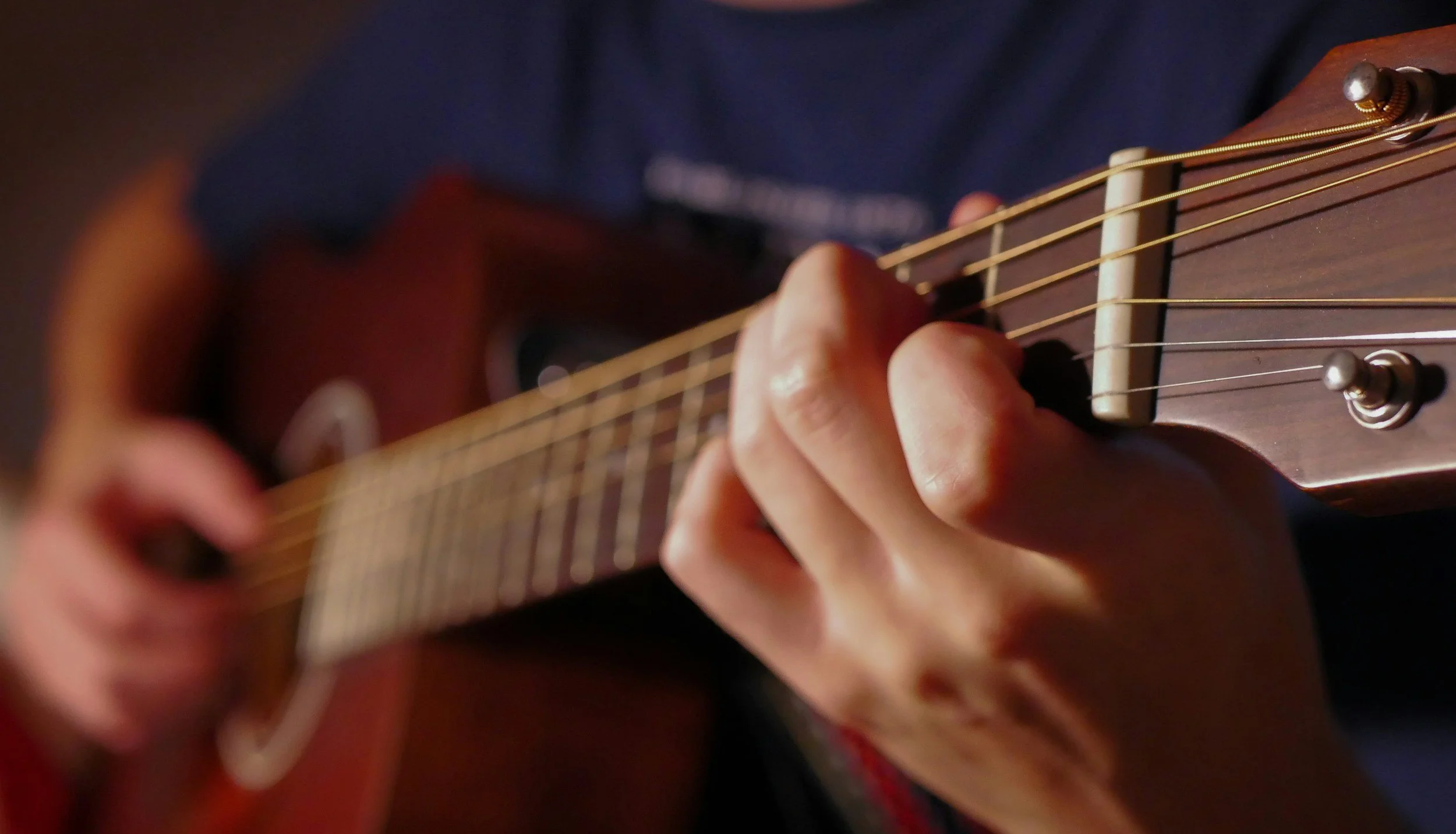
When chord changes feel slow, it’s usually because your fingers are:
lifting too far away from the strings
moving one at a time instead of together
searching for the next position
That creates hesitation.
And hesitation is what breaks the flow when you’re playing.
Look for “anchor fingers”
Many chord changes share at least one finger that stays in a similar place.
These are often called anchor fingers.
For example:
When moving between certain chords, one finger might stay on the same string or only move slightly.
If you can keep that finger in place, the rest of the chord becomes much easier to find.
This reduces movement, which increases speed without forcing it.
Slow it down properly
“Play it slower” is common advice but it’s often misunderstood.
Slowing down only works if you’re paying attention to the movement.
Instead of just playing slower:
Watch where your fingers go
Keep them close to the strings
Aim for smooth, controlled transitions
It should feel deliberate, not rushed.
Use “pause and place”
A really effective way to improve chord changes is:
Play the first chord
Pause
Place the next chord carefully
Repeat
This removes pressure and helps your fingers learn the correct shape.
Once that feels comfortable, you can gradually reduce the pause.
Don’t always practise in full songs
Songs are great but they can sometimes hide the problem.
If a chord change is difficult, isolate just that change and work on it separately.
Even 2–3 minutes focused on one transition can make a noticeable difference.
Consistency beats long practice sessions
You don’t need hours each day to improve.
Short, focused practice done regularly is far more effective.
Even 10–15 minutes spent working specifically on chord changes will add up quickly over time.
It should start to feel easier
At some point, something clicks.
Your fingers begin to find the shapes more naturally, and the hesitation reduces.
That’s when playing songs starts to feel more fluid — and far more enjoyable.
Thinking About Starting?
If you’re based in Richmond, Teddington or nearby or looking for online lessons across the UK. I offer relaxed, one-to-one guitar lessons focused on helping you play real songs confidently, without overcomplicating things.
Most of the time, it’s not about practising more it’s about practising the right things.
If learning guitar is something you’ve always wanted to do, the first step is simple.
Book your free intro call (see link on the Header of the website or Contact Me Here
For recomended Gear
I’m always asked for gear advice so I’ve started putting a page together so do look Here