Basic Guitar Setup for Beginners: What to Check
Mark Mannering Barton - Pick to Play Guitar
Make learning easier from the start
Many beginners assume that sore fingers, buzzing strings or difficult chords are simply part of learning. Some discomfort is normal as hands get used to the instrument, but a guitar that is awkward to play can make those first weeks much harder than they need to be.
A basic setup is about making sure the guitar is comfortable, stable and ready to practise.
Start with the simple checks
Make sure the guitar is in tune, the strings are not visibly rusty and the machine heads turn smoothly. Look along the neck from the body towards the headstock.
You are not trying to diagnose tiny adjustments. Simply notice obvious problems, such as a severe bend, a lifting fret or visible damage that needs a professional eye.
Check the string height
Next, think about string height. If the strings sit very high above the fretboard, chord shapes can feel unnecessarily hard. If they sit extremely low and buzz heavily, notes can sound unclear.
Do not start turning the truss rod or filing parts of the guitar at home. A good local guitar technician can make these adjustments safely, and it is often a worthwhile first investment.
Choose strings that suit you
Very heavy strings can be uncomfortable for a beginner, while an appropriate lighter gauge can make fretting easier. Your teacher or a guitar shop can help you choose without making it complicated.
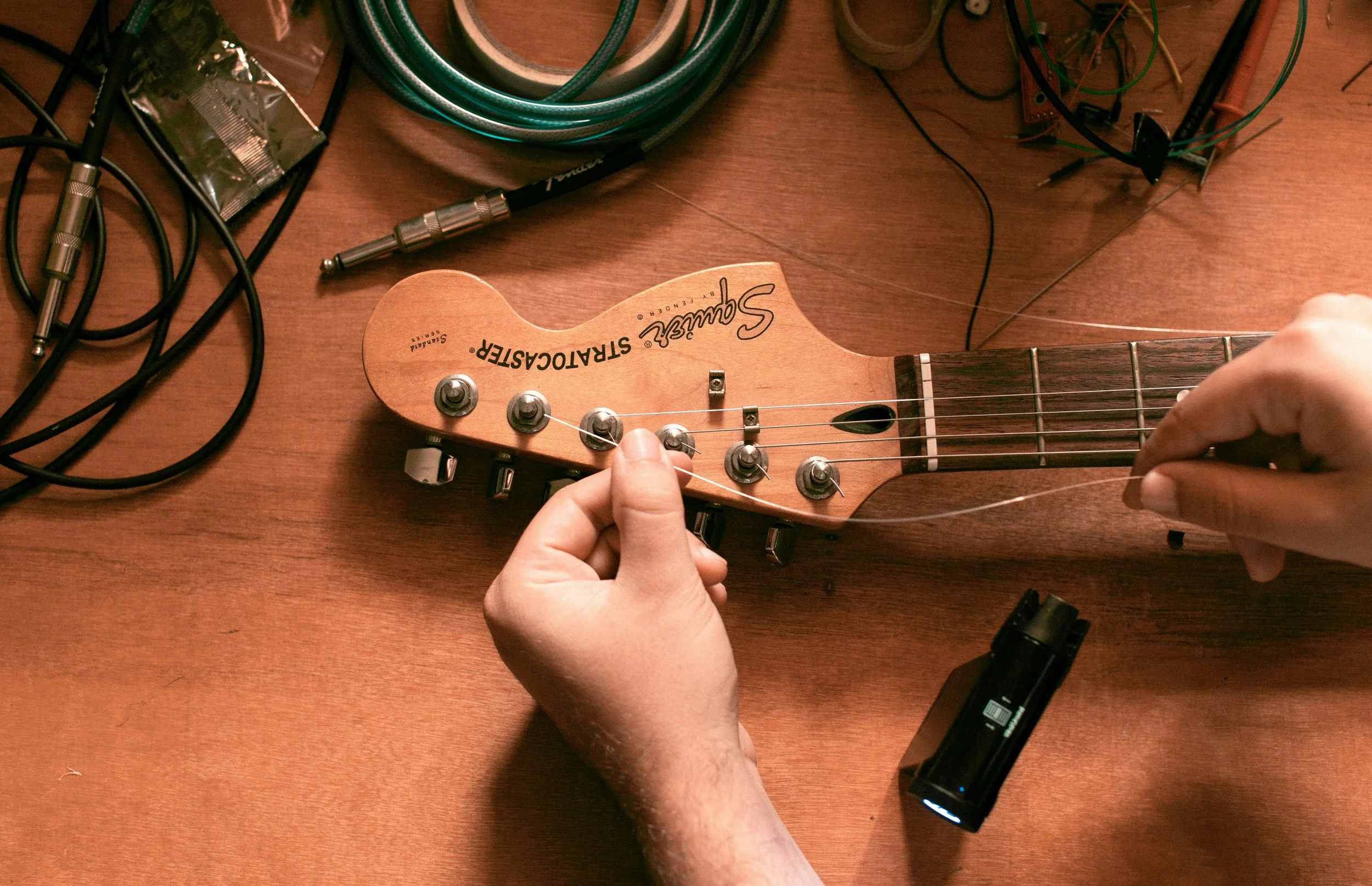
Replace old strings rather than trying to learn on strings that feel rough or refuse to stay in tune. Fresh strings can make the guitar feel more responsive and enjoyable to play.
Know the difference between setup and repair
It is useful to separate a basic setup from a repair. Wiping the guitar down, fitting fresh strings, checking the strap buttons and making sure the tuner works are all simple owner tasks.
Adjusting the neck, saddle, nut or frets is different work. If you are unsure, let a technician make the assessment rather than learning through an expensive mistake.
Explain what you are feeling
When you visit a shop or technician, explain what you feel when you play. Are chords hard to press? Do notes buzz in one area? Does the guitar go out of tune quickly?
Clear examples help them make the right adjustment. Ask what they have changed and how you can care for the guitar afterwards.
Set yourself up to play comfortably
Your playing position is part of the setup as well. Sit so the guitar is supported rather than clamped by your shoulder. Keep the wrist as relaxed as you can.
A small footstool or a different chair height can make a surprising difference, especially for an adult beginner returning to music after a long break.
Make the guitar easy to pick up
Check the practical details too: a comfortable chair, a strap if you play standing, a pick if you use one and a case or stand that keeps the instrument safe and visible.
The aim is not to make the guitar precious. It is to make it easy to pick up.
A guitar that invites practice
A basic setup will not play the guitar for you, but it removes unnecessary friction. Once it feels comfortable and reliable, you can spend your attention on rhythm, chords and songs rather than fighting the instrument.
Ready to starT playing?
Whether you're picking up a guitar for the very first time or returning after a long break, I'd be delighted to help you build solid foundations and enjoy the learning process.
Pick To Play Guitar offers relaxed, one-to-one lessons for adult beginners across Teddington, Twickenham, Richmond and the surrounding areas or UK wide online. Together we'll make learning the guitar enjoyable, rewarding and, most importantly, fun.
Get in touch today for a friendly chat about your guitar journey. I'd love to help you get started.
Book your free intro call
(see link on the Header of the website or Contact Me Here
For recomended Gear
I’m always asked for gear advice so I’ve started putting a page together so do look Here