What Is a Guitar Capo? A Beginner’s Guide
Mark Mannering Barton - Pick to Play Guitar
A small tool with a useful job
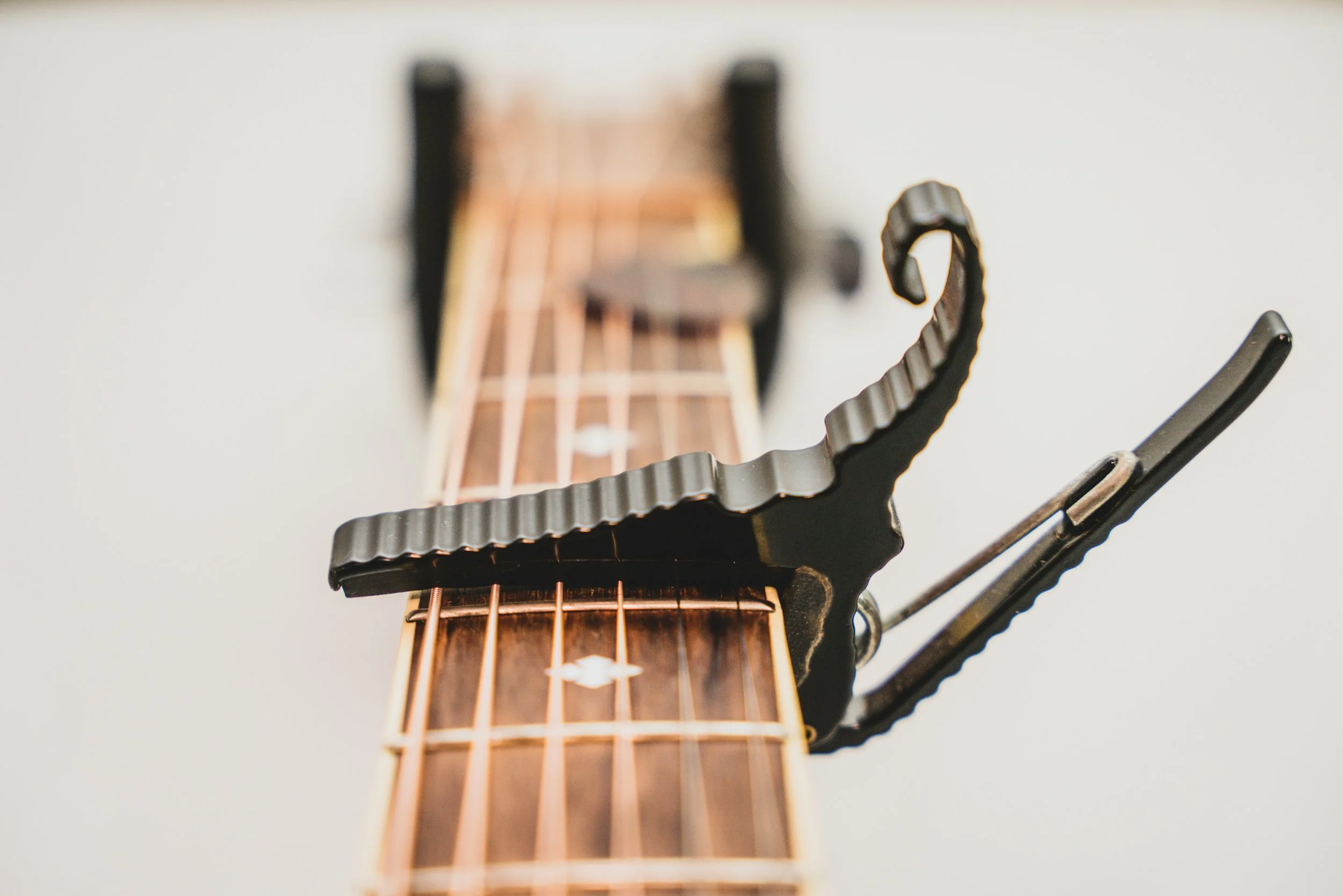
A capo is one of those guitar accessories that can look mysterious until somebody shows you what it does. It is a small clamp that sits across the strings on the fretboard. Once fitted correctly, it raises the pitch of the open strings while allowing you to use the chord shapes you already know.
That makes it useful for beginners. You may be able to play a small group of open chords comfortably, but a song may sit better for a singer in a different key. A capo can change the sound without asking you to learn a completely new set of difficult shapes straight away.
What a capo changes and what it does not
Think of a capo as a movable nut. If you place it at the second fret, the guitar is effectively moved up by two semitones. Your familiar chord shapes still look the same to your hands, but the notes you hear are higher.
A capo does not magically fix a chord change, improve tuning or make every arrangement easier. It simply gives you another useful option. The important thing is to understand that the shape you play and the chord the listener hears are not always the same once a capo is on the guitar.
Choose a capo that fits your guitar
Capos come in several styles: spring-loaded, trigger, screw-adjusted and more specialised versions. For most beginners, a straightforward, well-made spring or trigger capo is easy to use. The main thing is that it suits the shape and width of your fretboard.
Acoustic and electric guitars may need slightly different curves, while classical guitars usually need a capo designed for a flatter fingerboard. A local guitar shop can help you try one on your instrument. It is a small purchase, but a poorly fitting capo can cause buzzing or pull the strings out of tune.
Fit it close to the fret
Place the capo just behind the metal fret wire, not directly on top of it and not halfway between two frets. Keep it straight across the neck. This position usually gives a clear sound with the least pressure.
After you fit it, strum each open string slowly. If one string buzzes or sounds muted, adjust the capo slightly before pressing it harder. Too much pressure can pull strings sharp, particularly on a guitar with higher action. A small repositioning is often all that is needed.
Tune again after fitting it
Even a good capo can change the tuning very slightly. Get into the habit of checking the guitar after you put it on, especially before practising with someone else or playing along with a recording. This takes less than a minute and saves a lot of confusion.
If the guitar repeatedly sounds sharp with the capo on, do not assume you are doing something wrong. The capo may be sitting too far from the fret, pressing too hard or simply not be the best fit for your instrument. A teacher or technician can help you check.
Use the shapes you already know
The pleasure of a capo is that it lets you explore a different sound with familiar material. Try playing a simple progression you know without the capo, then move the capo to the second or third fret and play the same shapes again. Listen to how the colour changes.
Do not worry about memorising every resulting chord name immediately. At this stage, your ears and hands are learning something useful: the same shape can make a different sound in a different position. The theory can grow gradually alongside the playing.
Avoid a common beginner trap
A capo is not a reason to avoid learning new chords forever. It is a practical tool, not a shortcut around technique. Continue building clean chord changes, rhythm and listening skills. The capo simply widens the range of music you can approach while those foundations develop.
It is also worth removing the capo after playing and storing it safely. Leaving any clamp on the strings or neck for long periods is not usually necessary, and putting it in your case pocket means it will be there when you want it.
A simple experiment to try
Choose one easy chord sequence you already know and play it without the capo. Then try the same sequence with the capo at the second fret, checking the tuning each time. Notice what changes in the sound and what stays the same in your hands. Move it once more only if the guitar still feels comfortable and in tune.
This is a gentle way to build confidence. You are not trying to master theory in one sitting; you are learning to hear how a practical piece of equipment affects the music. Keeping the experiment small makes it easier to remember what you discovered and enjoy the difference. If you make a note of the fret and chord shapes you used, you will have a simple starting point for the next time you pick up the guitar.
Bring it to a lesson
If you own a capo, bring it to your next lesson. We can check that it fits properly, explore where it sits most cleanly and use it with chord shapes you already know. A few minutes of guided practice can remove the mystery very quickly.
Ready to starT playing?
Whether you're picking up a guitar for the very first time or returning after a long break, I'd be delighted to help you build solid foundations and enjoy the learning process.
Pick To Play Guitar offers relaxed, one-to-one lessons for adult beginners across Teddington, Twickenham, Richmond and the surrounding areas or UK wide online. Together we'll make learning the guitar enjoyable, rewarding and, most importantly, fun.
Get in touch today for a friendly chat about your guitar journey. I'd love to help you get started.
Book your free intro call
(see link on the Header of the website or Contact Me Here
For recomended Gear
I’m always asked for gear advice so I’ve started putting a page together so do look Here