How to Choose Your First Guitar (Without Overthinking It)
Mark Mannering Barton - Pick to Play Guitar
One of the biggest things that stops people learning guitar is the feeling that they need to buy the “right” guitar first.
So people end up:
watching endless YouTube videos
comparing specifications they don’t understand
worrying about brand names
or delaying starting altogether
In reality, your first guitar doesn’t need to be perfect.
It just needs to make you want to pick it up and play.
Don’t get too focused on the logo
A lot of beginners assume the name on the headstock is the most important thing.
It really isn’t.
There are fantastic affordable guitars now from brands that didn’t even exist a few years ago, and there are expensive guitars that simply won’t suit certain players.
The most important thing is:
how the guitar feels in your hands
whether it feels comfortable to play
and whether it inspires you to keep coming back to it
A less expensive guitar that feels good will take you much further than an expensive guitar you don’t enjoy playing.
Spend as much as you comfortably can
This doesn’t mean spending thousands.
But very cheap guitars can sometimes make learning harder than it needs to be.
Poor setup, uncomfortable action, tuning issues and badly finished frets can all make a beginner feel like they’re the problem when actually the guitar is fighting them.
Generally speaking:
Avoid the very cheapest options
But don’t feel pressured into “professional” instruments either
There’s a really good middle ground now where beginner guitars are genuinely excellent for the money. Most shops will guide you but don’t just stick to one store, visit lots (that’s part of the fun!).
The feel matters more than the specs
Most beginners don’t need to worry too much about:
wood types
pickup systems
boutique brands
technical specifications
At this stage, feel matters far more.
When you pick a guitar up, ask yourself:
Does it feel comfortable?
Does the neck feel manageable?
Is it easy enough to press the strings down?
Does it make you want to keep playing?
Those things matter much more than reading spec sheets online.
Play as many guitars as possible
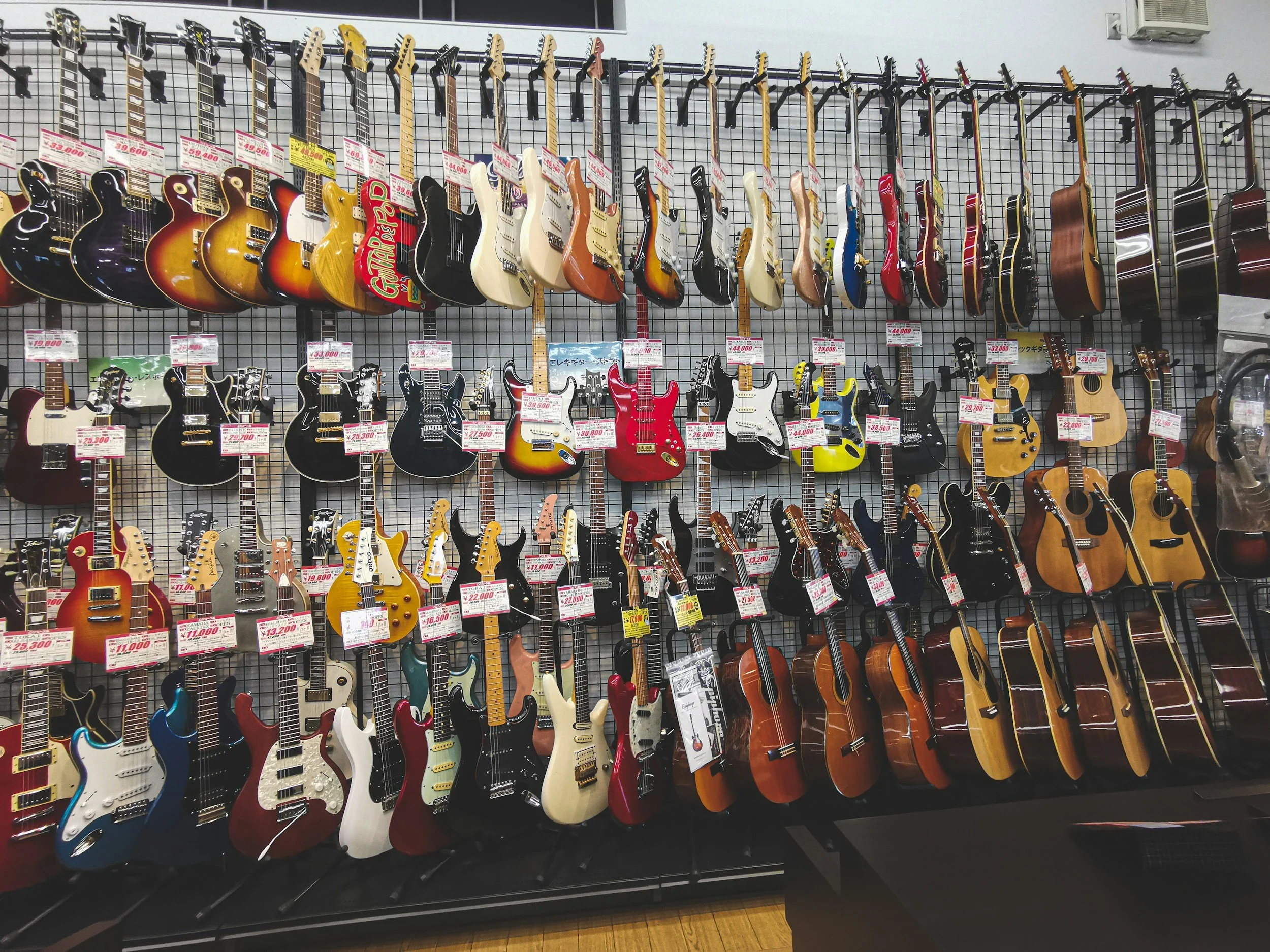
Even if you don’t know how to play yet, it’s worth visiting a guitar shop and physically trying different guitars.
Two guitars can look almost identical and feel completely different.
Some will immediately feel comfortable.
Others won’t.
That instinct is usually worth listening to.
You’re not trying to impress anyone, you’re trying to find a guitar you’ll actually enjoy spending time with.
Acoustic or electric?
This is another area people tend to overcomplicate.
The best choice is usually:
The guitar that matches the music you actually want to play.
If you love acoustic singer-songwriter music, start there.
If you’re inspired by rock, indie or blues, an electric guitar may keep you more motivated.
There’s no universally “correct” beginner guitar.
Motivation matters more than rules.
You don’t need your “forever guitar” … yet
A lot of people worry about making the wrong decision.
But your first guitar is rarely your last guitar.
As you improve, your tastes and preferences naturally develop.
What feels important later often won’t matter at all right now.
The goal of a first guitar is simple:
Get you playing consistently.
That’s it.
Good setup matters more than people realise
One thing that genuinely does make a difference is a proper setup.
Even a reasonably affordable guitar can feel dramatically better if it’s adjusted properly.
A good guitar shop should be able to help with:
string height
tuning stability
general playability
This can make learning far more enjoyable early on.
Don’t wait for the “perfect” guitar
A lot of people delay learning because they feel they haven’t found the ideal instrument yet.
But playing guitar is what teaches you what you actually like.
At some point, it’s better to stop researching and start playing.
Because ultimately:
the guitar you improve on is usually the one you enjoy picking up regularly.
Learning guitar should feel enjoyable
If you’re based in Richmond, Teddington or nearby or looking for online lessons across the UK — I offer relaxed, one-to-one guitar lessons focused on helping adults play real songs confidently, without overcomplicating things.
And yes… we can absolutely talk guitars too.
Book your free intro call (see link on the Header of the website or Contact Me Here
For recomended Gear
I’m always asked for gear advice so I’ve started putting a page together so do look Here